Supercarrier USS Gerald R. Ford to serve as floating nuclear power plant for land bases, Pentagon confirms
05/25/2026 / By Lance D Johnson
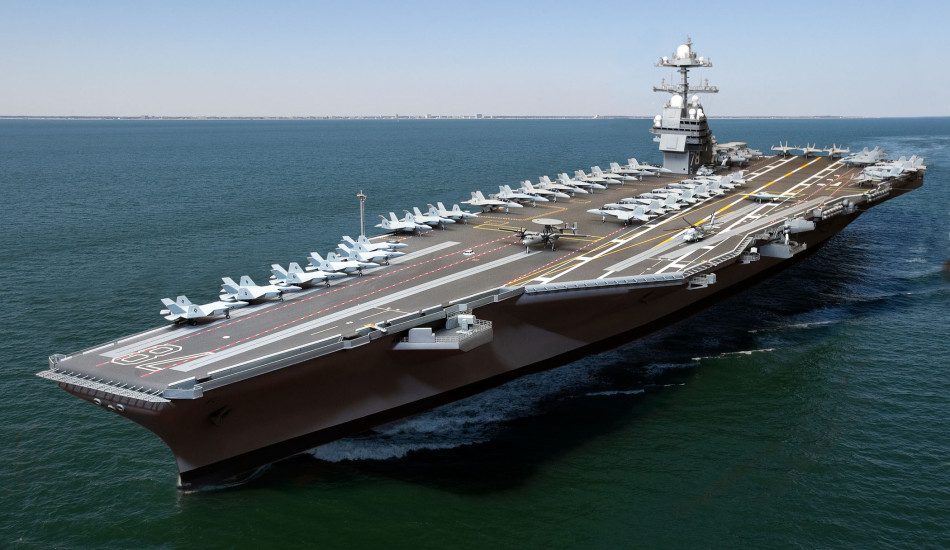
The United States Navy will this summer demonstrate that its most advanced and expensive warship, the $13-billion-per-copy USS Gerald R. Ford, can function as a floating nuclear power plant for land-based military installations, raising questions about the vulnerability of America’s aging power grid and the military’s preparedness for catastrophic infrastructure failure.
Acting Secretary of the Navy Hung Cao told the House Armed Services Committee on May 14 that the test would occur at Naval Station Norfolk in Virginia. “This summer, Norfolk Naval Base is going to be powered from an aircraft carrier,” Cao said. “We’re going to export the energy from the aircraft carrier to the base.” The announcement comes as the Pentagon increasingly acknowledges that long-range threats, including precision-guided ballistic missiles and one-way attack drones, now place even the American homeland at risk.
Key points:
- The USS Gerald R. Ford will test its ability to provide electricity to Naval Station Norfolk later this summer.
- The supercarrier carries two A1B nuclear reactors with a combined estimated output of 1,400 MWt.
- The Pentagon cites growing threats to domestic infrastructure including cyberattacks and long-range weapons.
- Critics question whether concentrating nuclear power assets near vulnerable coastal bases creates new strategic risks.
- The test follows the Ford’s record 326-day deployment, the longest for a U.S. carrier since the Vietnam War.
The floating city that could keep the lights on
The USS Gerald R. Ford, commissioned on July 22, 2017, represents the first new class of American aircraft carrier since the Nimitz class began in the 1970s. Named after former President Gerald Ford, the vessel measures 1,106 feet in length and 256 feet in width, with a full-load displacement exceeding 100,000 tons. It accommodates a crew of over 4,500 personnel and carries more than 75 aircraft, including both fixed-wing and rotary-wing types.
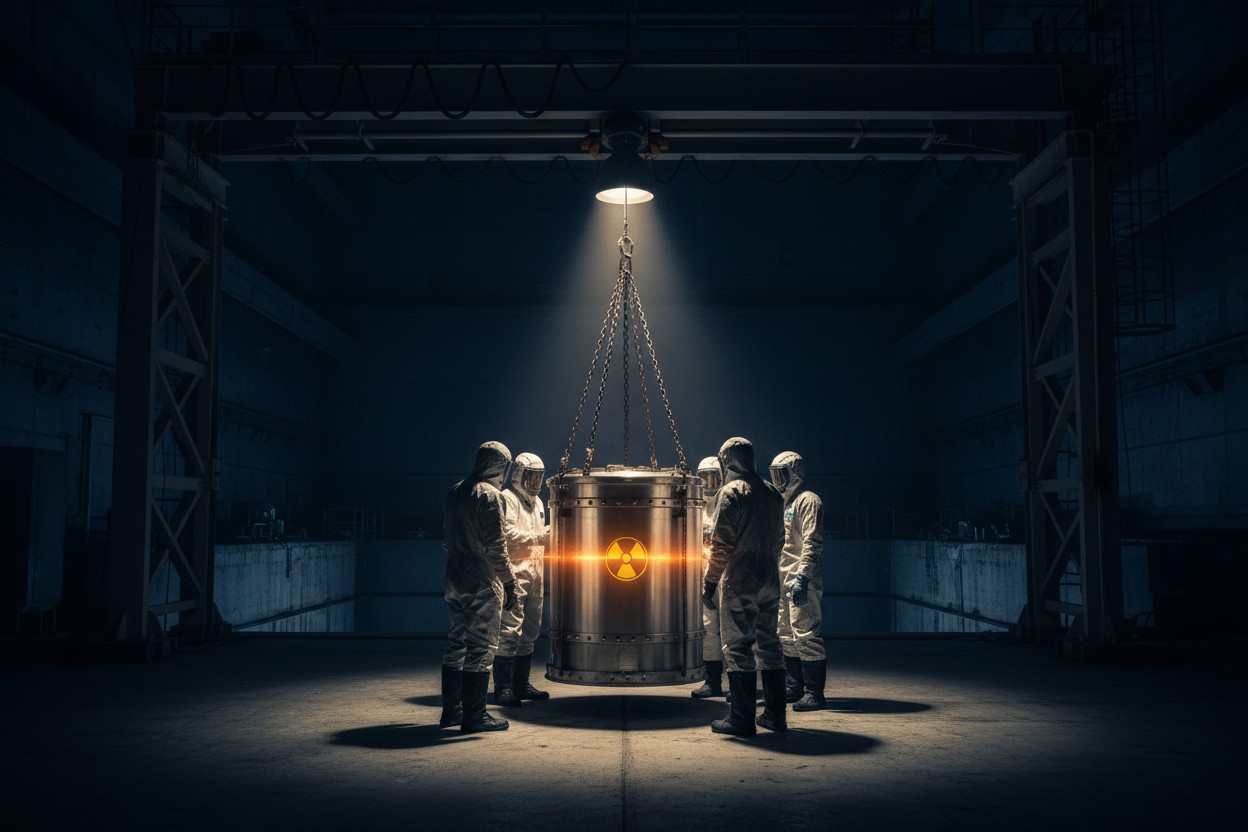
But the Ford’s true defining characteristic sits deep within its hull: two A1B nuclear reactors. While the exact power output remains classified, defense analysts estimate each reactor generates approximately 700 MWt, or megawatts thermal. Combined, the two reactors produce roughly 1,400 MWt, a fraction of what commercial power plants deliver to entire regions but sufficient to sustain a major military installation.
A Navy spokesperson explained the rationale to The War Zone directly. “The Department of the Navy is executing a multi-pronged strategy to ensure the delivery of firm, baseload power to our installations for energy resilience and mission assurance,” the spokesperson said. “One line of effort in the strategy is to deliver power from a Ford class nuclear-powered aircraft carrier to a compatible shore installation, to demonstrate the capability to meet emergent, mission critical needs. An initial test of this capability is being planned for later this year at Naval Station Norfolk.”
The concept of using ships to provide electricity ashore is not new, but deploying a Ford class carrier in this role opens possibilities that extend far beyond routine backup power. Supercarriers already function as floating cities, with electrical demands comparable to small towns. The Ford’s reactors offer a 25 percent increase in reactor energy compared to the A4W reactors used on Nimitz class carriers, and they require simpler operation.
Strategic vulnerability or necessary adaptation
The timing of this demonstration reflects growing concerns within the Pentagon about the resilience of American infrastructure. American officials have increasingly sounded alarms that areas once considered inaccessible sanctuaries, including locations within the United States, could become targets during future conflicts. The scale and scope of long-range threats continue to expand, with the proliferation of one-way attack drones lowering the barrier to entry for potential adversaries.
Many critical U.S. military facilities sit in regions prone to natural disasters. Hurricanes, wildfires, and floods can disrupt power for extended periods. Bases routinely provide essential services after such events, acting as epicenters for recovery operations. Ensuring uninterrupted power in any scenario becomes critical when bases must support both military operations and civilian relief efforts.
There are also long-standing concerns about the resiliency of America’s aging power grids. Cyberattacks represent an indirect but potentially devastating threat vector. A coordinated attack on electrical infrastructure could paralyze military operations without a single missile being fired.
The Ford recently returned from a marathon 326-day deployment, the longest an American carrier has been at sea since the Vietnam War. That deployment included supporting operations to capture Venezuela’s former President Nicolas Maduro and combat operations against Iran. The ship’s return to Norfolk positions it for the upcoming power demonstration.
The Center for a New American Security recently published a paper warning that Ford class carriers and the existing carrier force are becoming increasingly susceptible to attack by such weapons, risking destruction unless major tactical revisions occur.
Demonstrating the ability to provide power ashore could open additional operational possibilities beyond the current test. The U.S. military increasingly focuses on distributed concepts of operations involving widely dispersed forces, many forward-deployed at locations with limited established infrastructure. Turning an aircraft carrier into a floating power plant could prove valuable in combat scenarios abroad and during disaster relief missions at home. Restoring power often represents a critical component of these operations, helping restore access to medical care and other essential services.
Sources include:
Submit a correction >>
Tagged Under:
A1B reactor, aircraft carrier, ballistic missile, cyberattack, disaster relief, energy resilience, floating power plant, Ford class, House Armed Services Committee, Hung Cao, military infrastructure, natural disaster, Naval Station Norfolk, Navy test, nuclear power, Pentagon, power grid, supercarrier, USS Gerald R. Ford
This article may contain statements that reflect the opinion of the author
RECENT NEWS & ARTICLES