Iran drone strike hits Kuwait airport terminal, killing one in latest Gulf escalation
06/06/2026 / By Willow Tohi
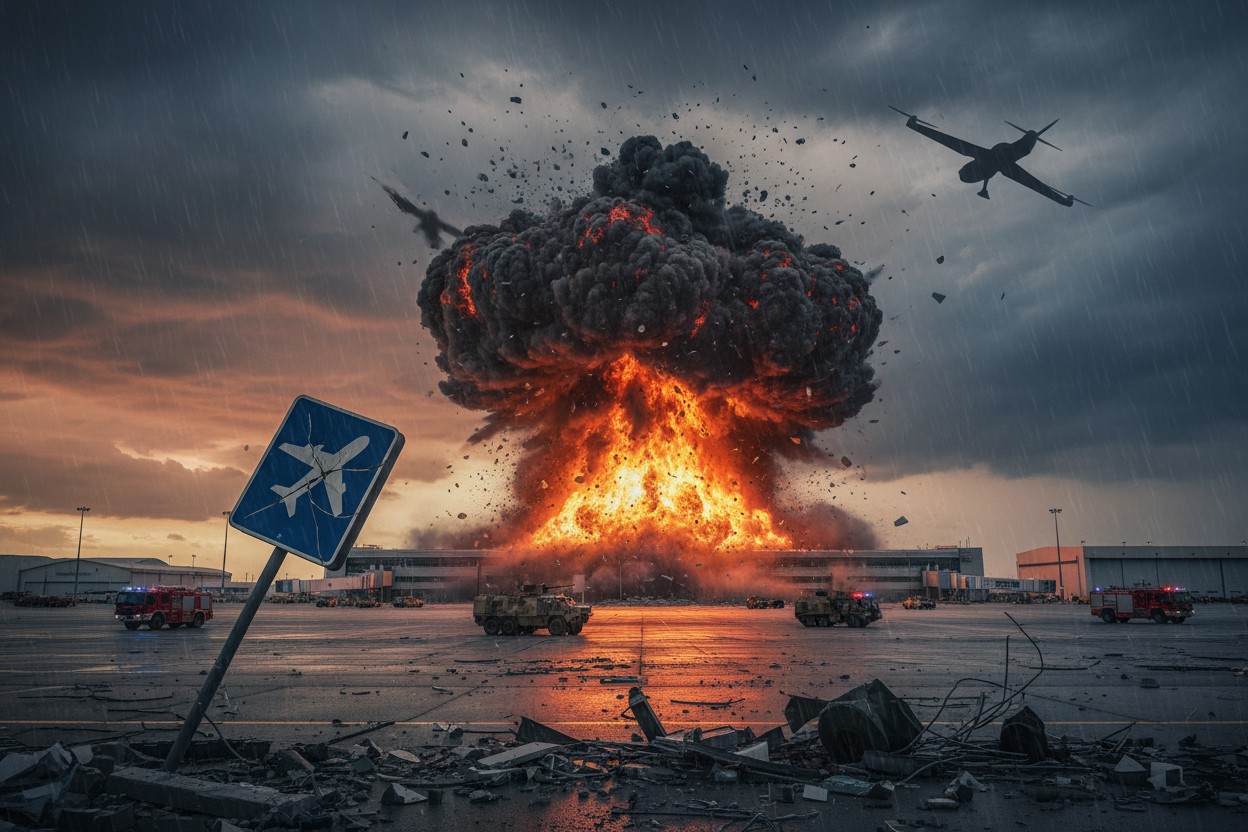
- An Iranian drone struck Kuwait International Airport’s Terminal 1 on June 3, killing one person and injuring dozens
- Surveillance footage released by Kuwaiti authorities shows the moment of impact, contradicting Iran’s denial
- Iran’s IRGC claims the damage was caused by a malfunctioning U.S. Patriot missile, not an Iranian strike
- U.S. Central Command attributes the attack to Iran, calling it a “deliberate, calculated and unjustified attack”
- The incident follows U.S. strikes on Iran’s Qeshm Island and Iranian retaliation targeting U.S. bases in Kuwait and Bahrain
A strike that shatters deniability
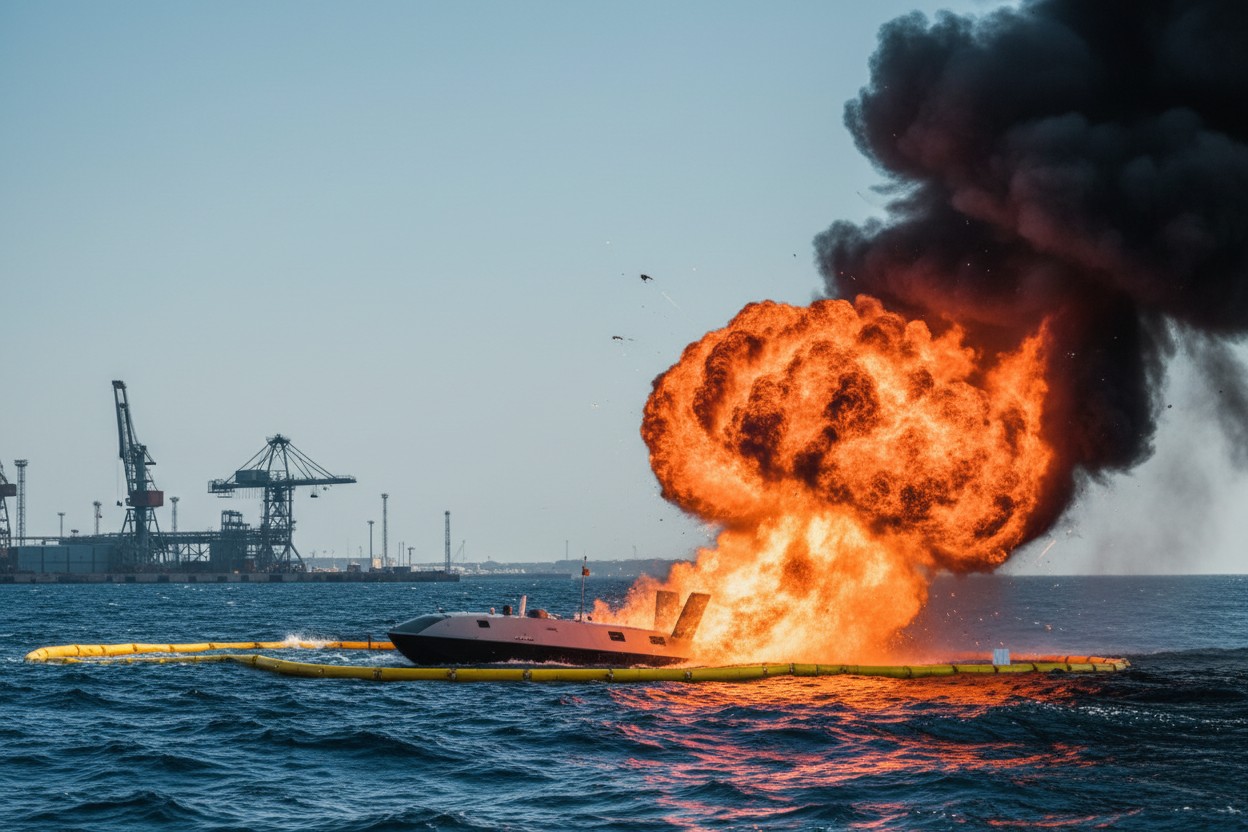
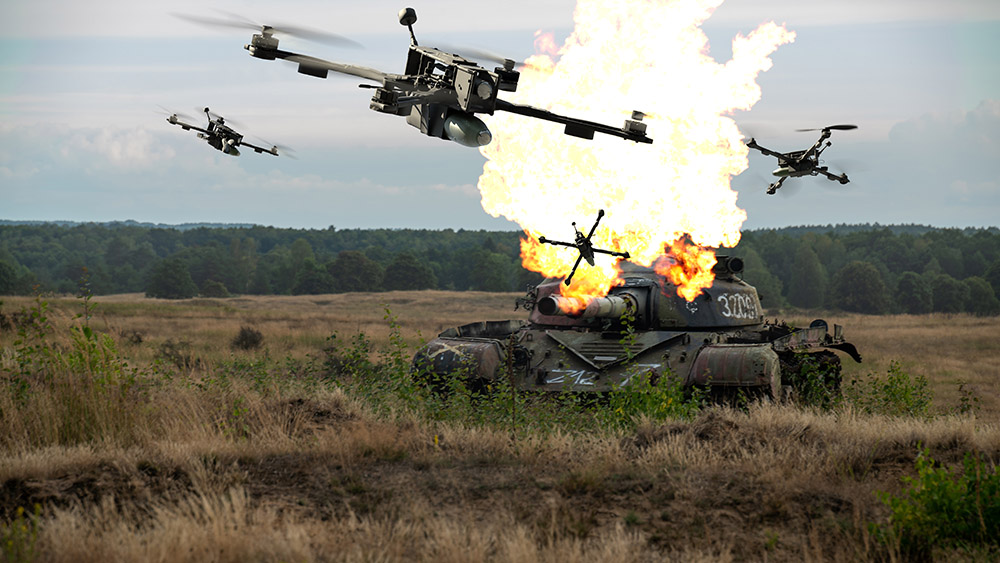
A drone slammed into Kuwait International Airport’s Terminal 1 on Wednesday, June 3, killing one person and injuring dozens in an attack that has ignited a fierce dispute over responsibility between Tehran and Washington. Kuwait’s Directorate General of Civil Aviation released surveillance footage showing the moment the aircraft struck the civilian terminal, forcing the airport’s closure and marking the deadliest single incident in the latest escalation between the United States and Iran. The conflicting accounts—Iran blaming a failed American Patriot interceptor, the United States pointing directly at Tehran—underscore how information warfare has become as central to this conflict as kinetic operations. This attack occurred after U.S. strikes on Iran’s Qeshm Island and Iran’s subsequent retaliation against American military assets in Kuwait and Bahrain.
The attack: What the footage shows
Surveillance video released by Kuwaiti authorities captured the precise moment the drone struck Terminal 1, causing extensive structural damage. Kuwait’s foreign ministry confirmed at least one fatality and serious injuries, with diplomatic missions among the facilities damaged. The attack temporarily shut down the airport, which had only recently reopened after a prolonged closure linked to broader regional conflict.
Kuwait’s Defense Ministry condemned what it called “criminal Iranian aggression” and reported that multiple drones and missiles were intercepted during the assault. The country quickly summoned Iran’s charge d’affaires and expelled two Iranian embassy staff members within 24 hours—a diplomatic response that reflected the severity of the incident for a nation hosting approximately 13,500 U.S. troops since the 1991 Gulf War.
Competing narratives: A battle over attribution
The Islamic Revolutionary Guard Corps has consistently denied targeting the passenger terminal. An IRGC spokesman claimed the destruction resulted from “an error in the American Patriot systems” after an interceptor failed to hit Iranian missiles and landed on the terminal instead.
U.S. Central Command immediately rejected this account. “Iran struck the civilian airport with drones in a deliberate, calculated and unjustified attack,” CENTCOM stated. Washington has not released independent evidence supporting either narrative, and Kuwaiti authorities have not issued a detailed forensic report on the cause of the explosion.
The exchange highlights a fundamental challenge in modern conflict: establishing facts when both sides possess powerful incentives to shape the narrative. Journalists and independent observers have limited access to the damaged site, leaving the public with irreconcilable accounts.
The vulnerability of Gulf allies
This attack exposes the precarious position of Gulf states that host significant U.S. military assets while sharing borders with Iran. Kuwait has been a key American ally since the 1991 Gulf War, when U.S.-led forces expelled Iraqi troops from the emirate. Today, approximately 13,500 American troops remain stationed there.
The crisis follows a pattern of escalating exchanges that have tested the limits of U.S. air defense capabilities. The U.S. military has acknowledged using nearly half of its Patriot interceptor inventory during the current conflict, complicating its ability to support allies in Ukraine and Israel. A report from the Center for Strategic and International Studies estimated that replenishing these stocks could take three to five years.
Iran’s apparent strategy of overwhelming air defenses with mass salvos has rendered U.S. interceptors less effective against coordinated attacks. This mirrors tactics seen in Ukraine, where Russian forces have used waves of drones and missiles to deplete Ukrainian air defense munitions before striking with precision weapons.
Nuclear talks and diplomatic stalemate
The violence occurs against a backdrop of faltering nuclear negotiations. President Donald Trump stated that talks with Iran continue but ruled out any sanctions relief. Secretary of State Marco Rubio has linked any sanctions relief to the complete surrender of Iran’s nuclear program, a position Tehran has rejected.
Iran’s missile capabilities remain a central concern. U.S. intelligence estimates that Iran has regained access to approximately 70% of its pre-war missile stockpile and 60% of its launchers, despite extensive American bombing campaigns. This resilience suggests that air strikes alone cannot eliminate Iran’s ability to project force across the region.
An unresolvable dispute
The Kuwait airport strike remains a disputed event with no independent investigation to resolve the competing claims. The United States and Iran have presented irreconcilable accounts, each serving domestic and strategic objectives. Washington seeks to portray Iran as an aggressor that targets civilians, while Tehran aims to depict American defensive systems as dangerous and unreliable.
The continued depletion of U.S. air defense munitions, combined with Iran’s resilient missile arsenal, suggests the region faces prolonged instability. As diplomatic channels remain open but strained, the risk of further miscalculation remains high. For Kuwait and other Gulf states, the crisis has revealed a harsh reality: hosting American military assets offers protection, but it also makes them targets in a conflict they did not choose.
Sources for this article include:
Submit a correction >>
Tagged Under:
big government, chaos, deception, disaster, globalism, Iran, Middle East, military tech, national security, nuclear, surveillance, Trump, truth, violence, weapons tech, WWIII
This article may contain statements that reflect the opinion of the author
RECENT NEWS & ARTICLES